How to Use Control Pads in Scorched Divide
If you’re learning how to use control pads in Scorched Divide, start by watching one objective and the units approaching it. Move a group to contest the pad, check the other routes before reinforcing, and rotate when your opponent has committed more units than you need to face. The basic habit is to read the board before giving the next move. A quick position check can save you from marching your entire army toward a fight that no longer helps you.
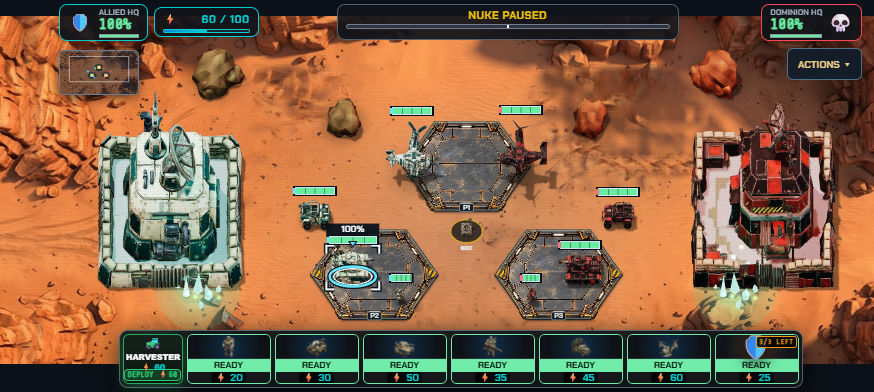
What should you look at before moving onto a pad?
Identify the position of the rival army, the path from your headquarters, and whether another route is open. The battlefield on the Scorched Divide game page shows three pads between the headquarters. Look at how the paths to the pads connect. A move toward a side pad can let you pressure a different area. A move toward the middle may bring both armies close together sooner. The route you pick matters because your opponent is choosing where to commit at the same time.
Learn the on-screen feedback in training
Open a training match and send units toward one pad. Observe how the game marks the objective when your units arrive, when opposing units approach, and when yours move away. Watch what changes on the game interface and what doesn't. Do this on more than one pad so you can recognize the feedback while a live match is moving quickly. Learn the icons from the current build as opposed to assuming that every real-time strategy game represents control the same way.
Choose one opening to practice
For your first few matches, pick one deliberately simple opening. Move some strength toward the objective you want to contest and keep track of where your other units can help. Check the screen after your opening moves rather than immediately issuing the same orders in every match. If the opponent heads for another route, you now have a choice to make rather than a surprise you can't explain.
Think in terms of tasks for your units. One group is contesting a position, another may be keeping a route available, and all of them can be reassigned as the match changes. You don't need elaborate orders on every move. Start by noticing which units are doing something that matters to your next decision. If a group is hanging back without a purpose, ask whether it can help hold a path or react to an opponent's push.
Use an opponent's commitment to inform your rotation
Imagine you head toward a side pad and see most of the opposing army already coming there. Before committing more units, check the center and the other route. If the opponent can cut off your route back, you may want a safer position before switching objectives. If you still have room to move, you can test whether pulling attention to one side creates an opportunity elsewhere. Sometimes holding your current position buys enough time for that second move. Sometimes arriving too late costs you both.
Decide when a fight is worth taking
Before chasing a retreating unit, look again at the pads and at the units you are leaving behind. The opponent may be drawing you away from the next useful position. Ask whether the chase improves your position or simply occupies units you could use somewhere else. The reverse also matters. Standing still on a pad while an unfavorable fight develops can be expensive. Give yourself permission to fall back and contest a better spot on the next move.
After a match, recall one moment when you moved more units than the position needed. Or recall one moment when you stayed too long. Write down which pad you were watching and one feature of the board you could have checked. Specific observations are easier to test in the next round than “play faster.”
Try the same opening against another player
Use the Scorched Divide game guide to recheck the basic controls, then repeat your opening in training until you can look away from the first move and read the rest of the board. When you're ready, try online 1v1. For your first match, judge your progress by how often you spot a useful rotation before the battle forces your hand. That makes the objective practice valuable even when the other player wins the round.